
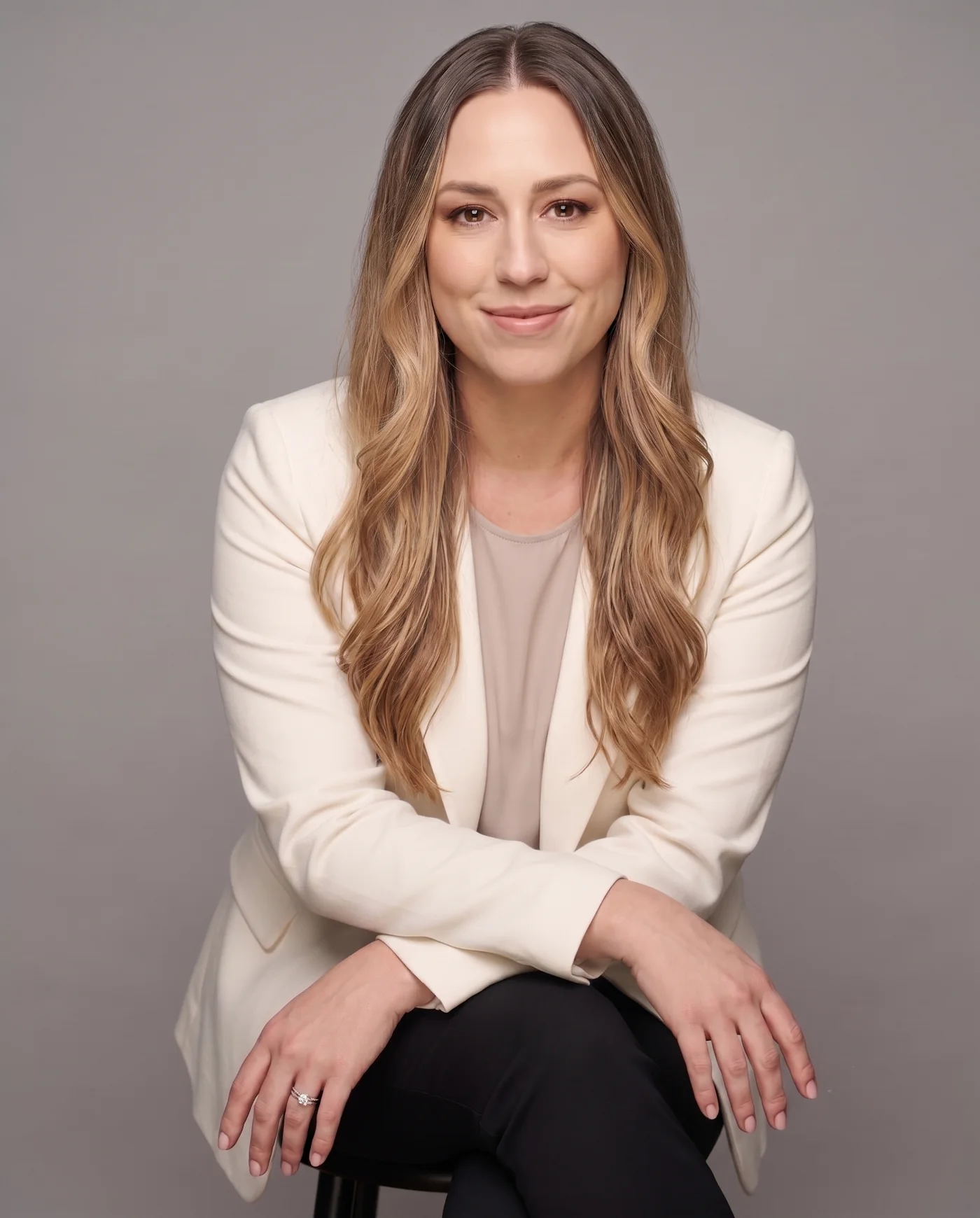
Why I started this.
Meagan Angelucci, founder and Executive Director, on why the Alliance exists.
In her own words
I became a disability case manager because I wanted to help people. I had no degrees yet, but I had a strong work ethic and the human touch that, in this field, too many people lack. That grew into progressive leadership roles, and into work across most of Canada’s major carriers, which gave me a clear view of how the system actually treats the people inside it.
I saw employers trying to take the hard conversations off the record. I saw investigations and repeated medical requests pile up, clogging an already strained health system and standing between a worker and their care. I saw people grow sicker while trying to navigate the very process that was supposed to help them recover. And I saw the part we are trained not to say out loud: case managers who took satisfaction in declining a claim, the quiet prejudice, the bias, the manipulation.
I am openly neurodivergent, diagnosed with ADHD later in life, so I have lived the masking and the cost of disclosure that I now spend my career studying. I trained as a researcher to measure all of it, and I built the instruments meant to catch a workplace doing the thing it swears it is not doing.
And then it came for the people I love. My father was managed out of the work he had given his life to, a man who cared too much, which in most workplaces gets filed as the same offence. The paperwork blamed his body. He did not need to be more resilient. He needed a workplace where it was safe to say “I am not okay” and be met by someone who would get it. He did not survive it.
And then it came for me. When I finally said out loud what I had spent years watching, I was restructured out for it.
Here is what all of it taught me: the system is not broken. When a thing fails the same way, in the same order, on the same kind of person, carrier after carrier, you are not looking at a malfunction. You are looking at a function.
“Be more resilient” is what a system says instead of changing. And anything built on purpose can be built differently.
So I am done asking the system to be a little less cruel as a personal favour. The workplace, not the diagnosis, decides recovery. Psychological safety is not a mood or a wellness webinar. It is measurable, which means it is buildable, which means its absence, almost everywhere, is a choice. The evidence already exists, across the research, the Canadian court record, and the accounts of people who lived it. What has been missing is an organized body willing to name the standard and hold practice to it.
That is why this alliance exists. We are naming the standard for psychologically safe, biopsychosocial disability management, building the membership of practitioners, clinicians, and reforming institutions who already know the system is failing, and keeping the evidence free, because safety should never depend on whether someone can afford it. We prescribe what good looks like first, and we build with the people and the carriers already moving toward it. We are pro-standard, not anti-anyone.
I am building this so that the next person who notices what is wrong, and says so, and is told they are too much, has something to hold that I did not. My father never had it. Neither did the workers I watched the system wear down.
If you have stood in that room, or sent someone into it, or spent your career trying to do this work right inside a system that made it hard, this is your alliance. Read the charter. Add your name.
You were not too much. The system was. And together, we can prove it, and then we can change it.
 Meagan AngelucciFounder and Executive Director
Read it. Sign it.
The charter is eight principles, signed by our founding board. It is free to read and free to sign, and it is the thing this letter is asking you to hold.
If anything here lands close to home and you need support right now, you are not alone. Reach a crisis line.
If you are in immediate danger, call 911. To talk to someone now, call or text 9-8-8, Canada’s Suicide Crisis Helpline, any time, in English or French.
Provincial and territorial crisis lines, including Indigenous-specific lines, are on our crisis page.